Bureau log · 42 titles played twice this year Second-run hours recorded: 1,918
Second Save Bureau mark Second Save Bureau Reviewed twice, scored once
A clean modern study at blue hour with a curved monitor showing an abstract map interface
The second run is the real one

We play every game twice before we score it

First run blind, notes only. Second run with full knowledge, stopwatch running. Almost everything interesting about a game's design shows up in the gap between those two passes.

42Double-played titles
1,918Second-run hours
6Scores revised
0Sponsored reviews
The bureau process

Four passes, in this order, every time

The sequence never changes, which is what makes the results comparable between one review and the next.

Pass 01

Blind run

Default difficulty, no guides, no patch notes read. We write down every moment of confusion at the minute it happens.

Pass 02

Timed run

Same game, full knowledge, stopwatch on every system. This is where padding, filler and hidden brilliance all become measurable.

Pass 03

Stress checks

Hardest setting, lowest hardware, longest save file. We break what we can and record exactly how the game responds.

Pass 04

Cold write-up

Seven days after finishing, from notes alone. What survived a week without the screen in front of us becomes the review.

A whiteboard covered in diagrams and sticky notes beside a table with laptops, a stopwatch and printed spreadsheets
Why two runs

The first playthrough tells you how a game feels. The second tells you how it was built.

A blind run is genuinely valuable, and it is also the only thing most coverage ever captures. It records surprise, confusion and momentum, all of which matter. What it cannot do is separate a design that is deep from one that is merely opaque, because on a first pass those two things produce an identical feeling.

The second run removes the fog. Systems you had to guess at become legible, and it turns out that some of them were hiding real complexity while others were hiding nothing at all. That distinction is the single most useful thing we publish.

  • Padding becomes visible. Sections that felt substantial at hour four often collapse to twenty minutes when you know the route.
  • Difficulty gets honest. A game that was hard because it withheld information is not hard on a second pass. One that was genuinely hard still is.
  • Writing gets re-read. Dialogue that seemed clever the first time frequently turns out to be doing nothing, and occasionally the reverse.
  • Endings get tested. We check whether a conclusion still lands when the surprise is gone, which is the only real durability test there is.

Latest reports

Recently through both passes

Each entry lists blind-run hours, second-run hours and the score that came out of the gap between them.

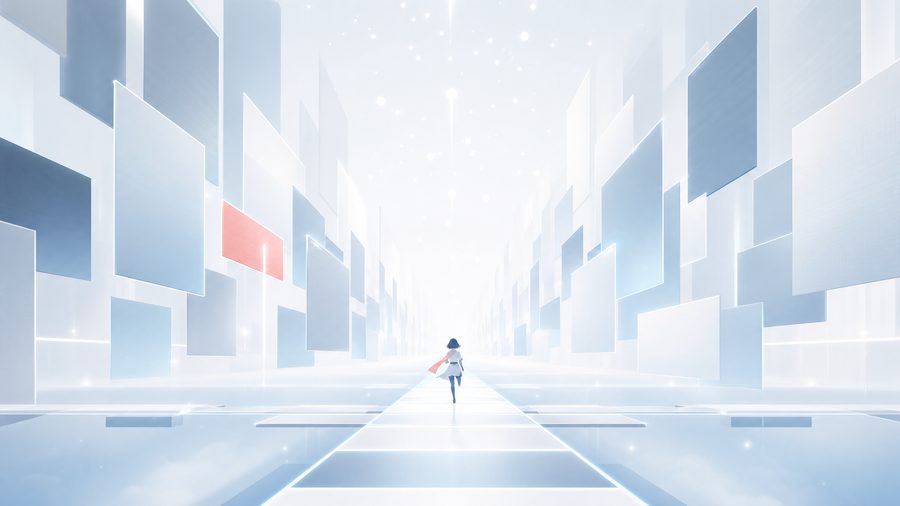
An abstract corridor of floating luminous panels with a small figure running along a light path Rhythm 8.7

Cadence Atrium: Sixty Tracks and Only One Input Problem

Timing windows measured across four controllers and two keyboards. The game is excellent and the calibration screen is broken, and the second run is where that becomes impossible to ignore.

Blind 12hSecond 21hScore 8.7
The scale

One number, awarded only after the second run is finished

We do not score partial playthroughs and we do not average category marks. The number describes how well a game holds up once you know everything it was hiding.

  • 9.0–10Better on the second pass than the first, which almost nothing manages
  • 8.0–8.9Holds its shape completely; the flaws are specific and small
  • 7.0–7.9Strong first run, thinner second; the depth was partly fog
  • 6.0–6.9One good idea and a great deal of repetition around it
  • Below 6Nothing survives knowing how it works
From the reading room

What people take from the second-run notes

The blind-hours versus second-hours figure has changed how I buy games. If a forty-hour game collapses to twelve when you know the route, I want to know that before I start.

Long-time reader · strategy and management

I came for the scores and stayed for the stress-check pass. Nobody else tells me what a game does to a save file after sixty hours, and that is the thing that actually ruins my evenings.

Reader · simulation and builders

The cold write-up rule is the reason I trust these reviews. A week away from the screen filters out everything that was just novelty, and it shows in the writing.